CHRISTMAS IN JULY — Donate toys & we'll waive the service charge! →

Don’t Wait for a Breakdown: Why Year-Round AC Maintenance Pays Off in Colorado Springs
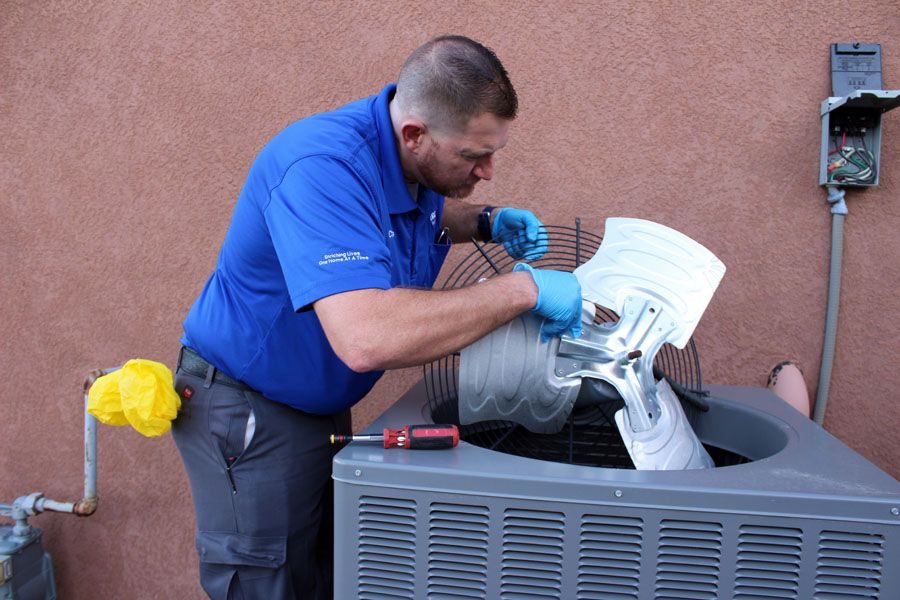
Most Colorado Springs homeowners think about air conditioning maintenance the same way they think about going to the dentist. They know they should do it regularly, they put it off until something hurts, and then they’re dealing with a more expensive problem than they would have had if they’d just kept up with it. The parallel isn’t perfect, but the pattern is exactly the same.
The reality of AC maintenance in Colorado Springs is that the conditions here are harder on HVAC equipment than in most markets. High altitude, intense UV exposure, dramatic temperature swings between morning and afternoon, hard water mineral buildup, and cottonwood season that clogs condenser coils faster than almost anywhere else on the Front Range all add up to a system that degrades faster without regular attention. Waiting for something to break before calling an HVAC technician isn’t a money-saving strategy in Colorado Springs. It’s how you end up replacing a compressor in the middle of August when every HVAC company in town has a two-week backlog.
What Actually Happens When You Skip AC Maintenance
Skipping annual maintenance doesn’t mean nothing happens. It means the things that would have been caught during a maintenance visit keep developing unchecked. Here’s what that looks like in practice for a Colorado Springs AC system.
Refrigerant Levels Drop Unnoticed
Refrigerant doesn’t evaporate under normal operating conditions. If your system is low on refrigerant, it’s leaking somewhere. A small leak that loses a fraction of a pound per year might not produce obvious symptoms right away, but at Colorado Springs elevations, where less dense air already affects refrigerant efficiency, even a modest deficiency has a more pronounced effect on cooling performance than it would at lower altitudes. A system running low on refrigerant works harder, cools less effectively, and puts additional stress on the compressor with every operating cycle. By the time you notice that your home isn’t getting as cool as it used to, the system has been running in a compromised state for a long time.
Coils Get Dirty and Stay Dirty
Both the evaporator coil inside your air handler and the condenser coil in the outdoor unit accumulate debris over time. In Colorado Springs, the outdoor condenser is dealing with cottonwood in late spring, dust from the eastern plains when the wind picks up, and UV degradation of the fins that help shed heat. A condenser coil that’s clogged with cottonwood or dust can’t transfer heat effectively, which forces the system to run longer cycles to reach your set temperature. Those longer cycles mean higher electricity bills and more wear on every moving component in the system. A dirty evaporator coil inside the air handler has similar effects and can also contribute to moisture problems if it ices over.
Capacitors and Contactors Fail Without Warning
Capacitors and contactors are among the most common failure points in residential air conditioning systems, and they’re also among the easiest to catch during routine maintenance. A capacitor that’s testing at the low end of its rated range is telling you it’s on its way out. A contactor showing signs of pitting or wear is doing the same. Both are inexpensive to replace during a maintenance visit. Both become an emergency service call when they fail on a 95-degree afternoon in July. In Colorado Springs, where summer afternoon temperatures can push well past 90 and a house heats up fast without AC, a failed capacitor goes from inconvenience to genuine comfort emergency in a matter of hours.
Condensate Drains Clog and Cause Water Damage
Your air conditioning system removes moisture from the air as it cools your home. That moisture has to go somewhere, and it goes through the condensate drain line. In Colorado Springs, hard water mineral deposits accumulate in condensate lines over time, gradually restricting flow until the drain backs up and water overflows into the air handler or the surrounding area. A clogged condensate drain can cause water damage to drywall, flooring, and the air handler itself. It’s also one of the most preventable maintenance issues there is. A technician clears and inspects the condensate drain during every routine maintenance visit.
Small Problems Become Compressor Problems
The compressor is the most expensive component in your air conditioning system. It’s also the component that suffers most when everything else in the system isn’t functioning correctly. Low refrigerant, dirty coils, restricted airflow, and electrical issues all put additional stress on the compressor with every operating cycle. A compressor that’s been running in a stressed state for years because maintenance kept getting skipped doesn’t usually announce its failure with warning signs. It just stops working, often at the worst possible time. Compressor replacement in a Colorado Springs home typically runs anywhere from $1,500 to $3,000 or more depending on the system. A decade of annual maintenance visits costs less than one compressor replacement.
The Colorado Springs Conditions That Make Maintenance More Important Here
Colorado Springs isn’t a typical market for HVAC equipment. The conditions here accelerate wear in ways that homeowners from lower-elevation, more temperate climates often don’t anticipate when they move here.
Altitude and Refrigerant Efficiency
At Colorado Springs elevations, air is less dense than at sea level. That affects how efficiently your AC system’s refrigerant cycle operates and how effectively the outdoor condenser sheds heat. A system that’s functioning at the lower end of acceptable refrigerant levels performs noticeably worse here than it would in Denver or at sea level. Altitude doesn’t break AC systems, but it does mean that the margin between a well-maintained system and a neglected one shows up more clearly in performance and operating costs.
Hard Water and Mineral Buildup
Colorado Springs water is hard. The mineral content that’s hard on your water heater, your dishwasher, and your plumbing fixtures is also hard on HVAC components that interact with condensate or humidifier systems. Mineral deposits build up in condensate drain lines and on evaporator coil surfaces over time, restricting flow and reducing heat transfer efficiency. This is a Colorado Springs-specific maintenance consideration that technicians who’ve worked this market understand and account for during routine service.
Cottonwood and Dust Loading
Cottonwood season in Colorado Springs is real, and it’s brutal for outdoor condenser coils. The white fluff that blankets yards and clogs window screens every late spring does the same thing to condenser coils, creating a layer of insulation that prevents the coil from shedding heat efficiently. Combined with the dust that blows in from the eastern plains when the wind picks up, outdoor condensers in Colorado Springs accumulate debris faster than in most markets. Annual coil cleaning is not optional here. It’s a maintenance item that directly affects how efficiently your system runs and how long it lasts.
Temperature Swings Between Morning and Afternoon
Colorado Springs is famous for dramatic daily temperature swings, particularly in spring and fall when mornings can be in the 40s and afternoons push past 70 or 80. That thermal cycling puts stress on refrigerant lines, electrical connections, and outdoor unit components that expand and contract repeatedly. Systems that aren’t maintained have loose connections and degraded components that feel that stress more acutely than systems that are regularly inspected and serviced.
When to Schedule AC Maintenance in Colorado Springs
The textbook answer is spring, before cooling season begins. That’s still the best timing if you have the flexibility, because it means your system goes into summer freshly serviced and any issues discovered during the visit can be addressed before you need the AC to perform on a 95-degree afternoon.
But the honest answer is that any time is better than never. If your system hasn’t been maintained in a year or more and it’s currently July, scheduling now is still the right call. A technician can assess current refrigerant levels, clean the coils, inspect electrical components, and confirm the system is operating correctly for the remainder of the cooling season. Finding out in July that your capacitor is on its way out is significantly better than finding out when it fails in August.
For Colorado Springs homeowners who want to stay ahead of both cooling and heating season, a combined HVAC maintenance visit in spring covers the AC before summer and gives your technician a look at the heating system while they’re there. A fall visit before heating season covers the furnace or heat pump. Two visits per year, both systems maintained, no surprises. That’s the standard WireNut recommends for Colorado Springs homes.
What a Professional AC Maintenance Visit Covers
A professional maintenance visit from WireNut’s HVAC technicians covers the full system, not just the obvious items. That includes refrigerant level check and leak inspection, electrical component testing covering capacitors, contactors, and wiring connections, evaporator and condenser coil inspection and cleaning, condensate drain inspection and clearing, blower motor and fan blade inspection, airflow assessment, thermostat calibration and smart thermostat settings review, and a full operating cycle test to confirm the system is performing within manufacturer specifications.
If anything is flagged during the visit, you’ll get a clear explanation of what was found and what the options are before any additional work is recommended. WireNut operates on upfront pricing, so there are no surprise charges at the end of the visit. For more on what our maintenance service covers, visit our air conditioning maintenance page, or browse our full air conditioning services for Colorado Springs homeowners.
Don’t Wait for a Breakdown to Find Out Where Your System Stands
The homeowners who end up paying for emergency AC service in the middle of a Colorado Springs summer are almost always the ones who put off maintenance until something stopped working. The ones who schedule a maintenance visit in the spring, or call when they haven’t had service in over a year regardless of the season, are the ones who spend less on HVAC over the life of their system and deal with fewer surprises.
WireNut’s licensed HVAC technicians serve Colorado Springs homeowners with professional air conditioning maintenance, honest assessments, and upfront pricing. Schedule online and we’ll get your system inspected before the next heat wave arrives.
Frequently Asked Questions About AC Maintenance in Colorado Springs
How often should I have my AC serviced in Colorado Springs?
Once a year is the standard recommendation, ideally in spring before cooling season begins. Colorado Springs conditions, including hard water mineral buildup, cottonwood loading on outdoor coils, and altitude effects on refrigerant efficiency, make annual maintenance more important here than in many other markets. Homes with older systems, pets, or high dust exposure may benefit from a mid-season check as well. Most manufacturers also require annual professional maintenance to keep warranty coverage in force.
What happens if I skip AC maintenance for a year or two?
Skipping maintenance doesn’t mean nothing happens. It means the things that would have been caught during a maintenance visit keep developing unchecked. Refrigerant levels drop slowly, coils accumulate debris that reduces efficiency, capacitors and contactors wear toward failure, and condensate lines build up mineral deposits that can cause water damage. None of these issues announce themselves with obvious warning signs until they’ve been developing long enough to cause a real problem. In Colorado Springs, where summer heat can make a non-functioning AC a genuine comfort emergency, catching these issues during a routine maintenance visit is significantly less expensive and disruptive than dealing with them as failures.
Is it worth getting AC maintenance if my system is older?
Yes, arguably more so than for a newer system. An older AC system has more wear on its components and less margin before failures start cascading. Regular maintenance on an aging system extends its reliable service life, catches the components that are approaching failure before they take out other parts of the system, and gives you accurate information about where the system stands so you can plan for replacement on your own timeline rather than being forced into an emergency decision. A technician who maintains an older Colorado Springs system can also give you an honest assessment of whether continued maintenance investment makes sense versus planning for replacement.
Can I do AC maintenance myself?
Some maintenance items are DIY-friendly, specifically replacing the air filter on a regular schedule and keeping the area around the outdoor condenser clear of debris and vegetation. Beyond that, most of what matters in a professional maintenance visit requires equipment and training that aren’t reasonable for homeowners to replicate. Checking refrigerant levels requires specialized gauges and EPA certification to handle refrigerant. Testing capacitors and contactors requires electrical diagnostic equipment. Cleaning evaporator coils properly requires the right cleaning agents and technique to avoid damaging the fins. The DIY items are worth doing. The professional items are worth scheduling.
Why does my AC work fine but my energy bills keep going up?
An AC system that’s losing efficiency doesn’t always produce obvious symptoms before it shows up on your utility bill. Dirty coils, low refrigerant, a miscalibrated thermostat, or a blower motor that’s working harder than it should all reduce efficiency without necessarily preventing the system from cooling your home. The system just runs longer cycles to get there, which translates directly to higher electricity consumption. In Colorado Springs, where Colorado Springs Utilities rates and summer cooling loads combine to make July and August the most expensive months for most households, an inefficient system has a meaningful impact on your bill. A maintenance visit that restores the system to proper efficiency typically recovers its cost in energy savings within a single cooling season.
How much does AC maintenance cost in Colorado Springs?
A professional air conditioning maintenance visit from WireNut in Colorado Springs is a straightforward service with upfront pricing before any work begins. The cost of routine maintenance is significantly less than the cost of the repairs it prevents. A capacitor replacement during a maintenance visit costs a fraction of what an emergency service call costs when the capacitor fails on a hot afternoon. A refrigerant leak caught and addressed during annual maintenance costs far less than a compressor that’s been stressed by low refrigerant for two or three seasons. The math on regular maintenance versus deferred maintenance almost always favors keeping up with service.
Does WireNut offer any kind of maintenance plan for Colorado Springs homeowners?
WireNut serves Colorado Springs homeowners with professional HVAC maintenance on a scheduled basis. The best way to find out about current maintenance plan options and what’s included is to schedule a visit or ask your technician during a service call. Regular maintenance customers benefit from having a technician who knows their system’s history and can track trends in component wear over time, which makes for more accurate assessments and fewer surprises. Schedule online to get started.