See our current specials →

Types of Electrical Outlets in Your Colorado Springs Home
Walk through any Colorado Springs home and you’ll find more than one type of outlet, even if they all look pretty similar from the outside. Two-prong, three-prong, GFCI, AFCI, USB, smart, tamper-resistant, 240-volt. Each one exists for a reason, and knowing the difference helps you understand what your home has, what it might be missing, and when it makes sense to upgrade. This guide breaks down the most common outlet types found in Front Range homes, what they do, and where you’d typically find them. If you already know what you need, our outlet repair, outlet installation, and outlet upgrade pages cover what those projects look like.
Standard 15-Amp Outlets
The most common outlet in any Colorado Springs home. Standard 15-amp receptacles have two vertical slots and a round ground hole and handle the everyday load of lamps, phone chargers, televisions, and most small appliances. They’re designed for circuits that carry up to 15 amps of current, which covers the vast majority of household devices. If your home was built after the mid-1960s, most of your general-use outlets are probably this type.
20-Amp Outlets
Twenty-amp outlets look almost identical to 15-amp outlets except for one detail: a small horizontal slot on one side of the face. That T-shaped slot is what allows a 20-amp plug to seat properly. These outlets are wired to 20-amp circuits and are typically found in kitchens, laundry rooms, and garages where appliances draw more power. If you’re adding an outlet for a refrigerator, microwave, washing machine, or workshop equipment, a 20-amp outlet on a dedicated circuit is usually the right call.
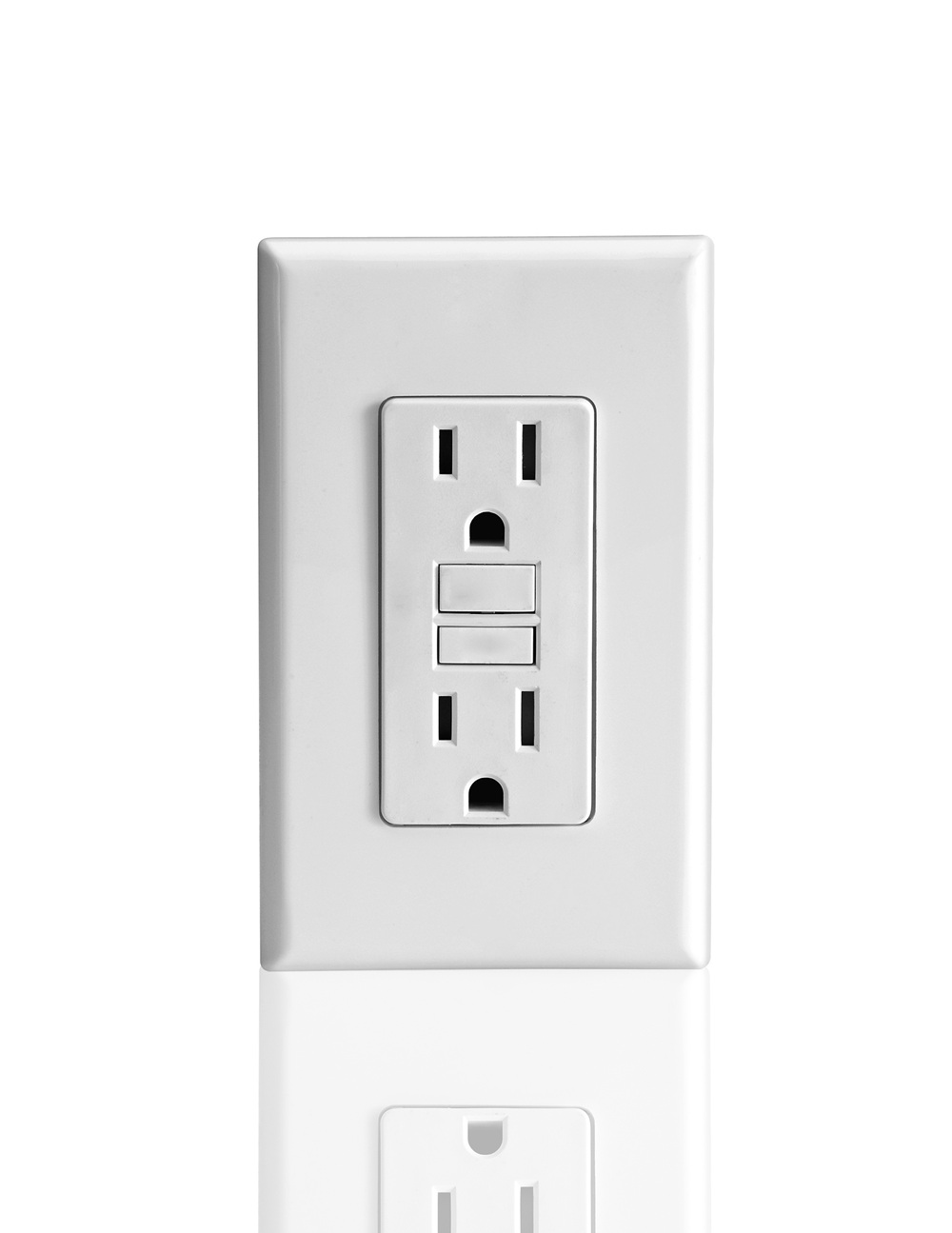
GFCI Outlets
GFCI stands for ground fault circuit interrupter. These outlets monitor the flow of electricity and cut power in milliseconds if they detect current taking an unintended path, like through a person. You’ll recognize them by the test and reset buttons on the face. Current electrical code requires GFCI protection in kitchens, bathrooms, garages, unfinished basements, crawl spaces, outdoor locations, and anywhere within six feet of a sink. A lot of older Colorado Springs homes still have standard outlets in those locations, which is both a safety issue and a code compliance concern worth addressing.
AFCI Outlets
AFCI stands for arc fault circuit interrupter. Where GFCI protection is designed to prevent shock, AFCI protection is designed to prevent fires. It detects dangerous arcing inside wiring and connections, the kind of electrical fault that can ignite materials inside your walls without ever tripping a standard breaker. AFCI protection is required in bedrooms and living spaces in newer construction and significant remodels. Older Colorado Springs homes, especially those with aging wiring, often lack this protection entirely. AFCI can be installed as an outlet or as a breaker at the panel.
Two-Prong Outlets
Two-prong outlets have two vertical slots and no ground hole. They’re the oldest receptacle type still found in Colorado Springs homes, typically in houses built before the 1960s when grounded wiring wasn’t yet standard. The problem with two-prong outlets isn’t just that modern plugs don’t fit. They offer no grounding protection, which means sensitive electronics are more vulnerable to power surges and there’s no safe path for fault current. Upgrading two-prong outlets to grounded three-prong receptacles is one of the more common electrical projects in older Front Range homes.
Tamper-Resistant Outlets
Tamper-resistant outlets look like standard receptacles but have spring-loaded shutters inside the slots that only open when equal pressure is applied to both at the same time. That’s exactly what happens when you insert a plug, and exactly what doesn’t happen when a child tries to stick something into a single slot. They’ve been required by code in new residential construction since 2008. If you have young kids in your Colorado Springs home and your outlets predate that requirement, tamper-resistant upgrades are a straightforward safety improvement worth making.
USB and USB-C Outlets
USB combination outlets replace a standard receptacle in the same box and add one or more USB or USB-C charging ports alongside the standard plugs. No adapter needed, no block taking up the outlet space. They’re especially popular in kitchens, home offices, bedrooms, and anywhere devices get charged regularly. Most install on existing wiring without any circuit changes, and the USB-C versions support faster charging speeds for newer devices. If you’re still relying on bulky wall adapters in every outlet, this is an easy upgrade worth considering.
Smart Outlets
Smart outlets connect to your home’s Wi-Fi and let you control and monitor power remotely from your phone or through a voice assistant. You can set schedules, track energy usage, and cut power to devices you don’t want running while you’re away. They install in the same box as a standard receptacle and work with most home automation systems. Smart outlets are popular in Colorado Springs homes for controlling holiday lighting, entertainment systems, and any device you want to manage without being in the room.
Outdoor and Weatherproof Outlets
Outdoor outlets in Colorado Springs need to handle freeze-thaw cycles, moisture, and temperature swings that indoor receptacles aren’t built for. Weatherproof outlet covers protect the receptacle whether something is plugged in or not. Older covers only protected when nothing was connected. All outdoor outlets are required to be GFCI protected by code. If you’ve got older exterior outlets without proper covers or GFCI protection, that’s worth addressing before Colorado’s weather does it for you.
240-Volt Outlets
Most household outlets run on 120 volts. Large appliances like electric dryers, ranges, water heaters, central air conditioning units, and EV chargers require 240 volts and use a completely different outlet configuration. These receptacles are larger, use a dedicated circuit, and require heavier gauge wiring. If you’re adding a new large appliance or installing an EV charger in your Colorado Springs home, WireNut’s electricians will assess your panel capacity and install the right 240-volt circuit for the job.
Not sure what type of outlets you have or whether they’re up to code? WireNut’s licensed electricians serve Colorado Springs homeowners with straightforward assessments, upfront pricing, and same-day availability for urgent issues. Whether you need one outlet looked at or a whole-home upgrade, we’ll tell you exactly what you’re working with before any work begins. Schedule online today and we’ll take it from there.
Frequently Asked Questions About Outlet Types
How do I know what type of outlets I have in my home?
Start by looking at the face of the outlet. Two slots with no round hole below them means a two-prong ungrounded outlet. Two slots plus a round hole is a standard three-prong grounded receptacle. If there are test and reset buttons on the face, it’s a GFCI outlet. A T-shaped horizontal slot on one side indicates a 20-amp outlet. If you’re not sure whether your outlets are actually grounded or just look like they are, a licensed electrician can test them quickly. WireNut’s electricians assess outlet types throughout Colorado Springs homes and will tell you exactly what you have and what’s worth upgrading.
Are two-prong outlets safe to use?
They’re not immediately dangerous in the way a sparking outlet is, but they do carry real limitations. Two-prong outlets aren’t grounded, which means sensitive electronics plugged into them have no protection against power surges. They also won’t accept three-prong plugs without an adapter, and those adapters don’t actually add grounding protection. In older Colorado Springs homes where two-prong outlets are still common, upgrading to grounded three-prong receptacles or GFCI outlets is a worthwhile improvement for both safety and convenience.
What is the difference between GFCI and AFCI outlets?
GFCI outlets protect against electric shock by detecting ground faults and cutting power instantly. AFCI outlets protect against electrical fires by detecting arc faults inside wiring and connections. They solve different problems and in many cases both are required in the same home. GFCI is required in wet and damp locations like kitchens and bathrooms. AFCI is required in bedrooms and living spaces in newer construction. Many older Colorado Springs homes lack one or both, and WireNut can assess your home and bring it up to current code.
Can I replace a two-prong outlet with a three-prong outlet myself?
Technically you can swap the receptacle, but if there’s no ground wire behind the outlet the new three-prong receptacle won’t actually be grounded even though it looks like it is. That’s a problem because devices that rely on grounding for protection won’t have it. The code-compliant solution is either to run a new ground wire back to the panel or to install a GFCI outlet, which provides shock protection even without a ground wire. Either way it’s a job for a licensed electrician to make sure it’s done correctly and safely.
How many outlets does a room actually need?
Current electrical code requires a receptacle within six feet of any point along a wall, which works out to outlets roughly every twelve feet around the perimeter of a room. In practice, most Colorado Springs homeowners find that older homes fall short of that standard, especially in bedrooms and living areas where device use has increased dramatically since the home was built. If you’re relying on extension cords or power strips to cover the gap, adding outlets in the right locations is a cleaner and safer solution.
Do outdoor outlets need to be a special type?
Yes. Outdoor outlets in Colorado Springs need to be GFCI protected by code, and they need weatherproof covers that protect the receptacle whether something is plugged in or not. Colorado’s freeze-thaw cycles and temperature swings put extra stress on outdoor electrical components, so the installation matters as much as the outlet type. If your exterior outlets have older covers that only close when nothing is plugged in, or if they’re not GFCI protected, those are worth upgrading before moisture or cold weather causes a bigger problem.
When should I upgrade my outlets?
There are a few clear triggers. If your Colorado Springs home still has two-prong outlets in frequently used locations, that’s worth addressing. If you have standard outlets in kitchens, bathrooms, garages, or outdoor locations without GFCI protection, that’s a code and safety issue. If outlets are loose, warm to the touch, discolored, or making noise, those need attention sooner rather than later. And if you’re remodeling or adding new appliances, it’s a good opportunity to assess the whole room. WireNut’s electricians can walk through your home and help you prioritize what’s actually worth doing versus what can wait.